Listening
539
trans* people engaged with Trade from June 2025 to June 2026 across our sexual health clinic services, health promotion and outreach, counselling service, social groups, and the wide spectrum of community engagement, advocacy, and events delivered by the Trans* Thriving Project.
The Trans* Thriving project in numbers
People listened to
People participated in listening 1-1’s
Number of community listening events
People attended listening events
People attended taster events
Taster events
New groups formed
Trans* volunteers
Listening as a method for organising
Listening campaigns are a key tool used within grassroots community organising to hear and gather experiences and concerns from local people and groups. These insights are then used to shape community-led direct action and to drive social change. With expertise and training from Citizens UK, key staff and volunteers will be equipped with essential community organising tools and processes that will underpin the work of the Trans* Thriving project. You can read more about Citizens UK here: www.citizensuk.org
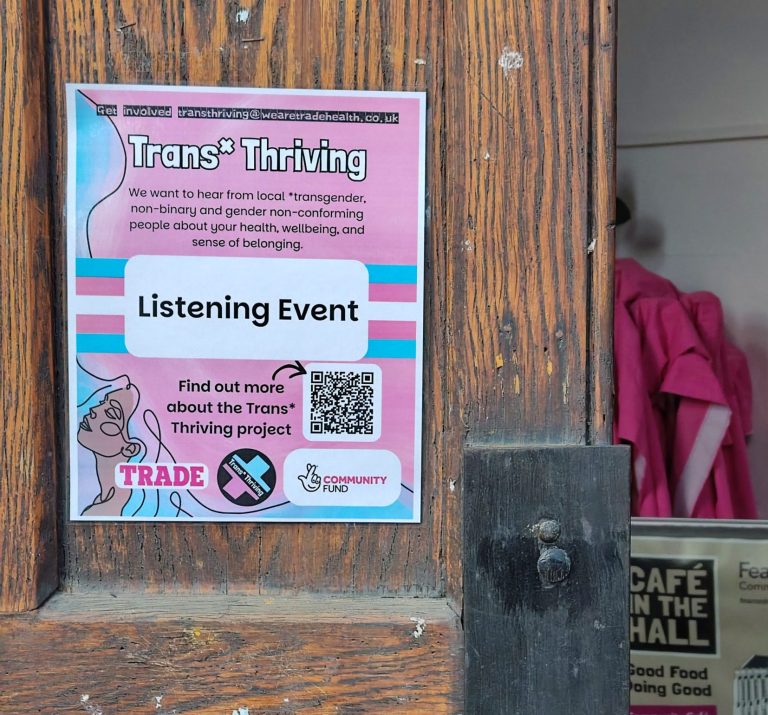
The Trans* Thriving project uses a mixture of 1-1 listening meetings with trans* individuals and community listening events across Leicester, Leicestershire, and Rutland.
Trade is also part of Citizens UK in Leicester and Leicestershire and is a central part of the ongoing campaign on trans healthcare locally.
Listening 1-1s
Meeting with individual local trans* people across Leicester, Leicestershire, and Rutland on a one-to-one basis to hear directly about their experiences of
accessing spaces for their health and wellbeing, what they would most like to see change, and what new groups/activities they would like to be able to access.
Listening Events
Listening events will also be held to draw together key representatives from existing trans* inclusive groups, communities, and key organisations with an existing trans population. Groups are identified across Leicester, Leicestershire, and Rutland. These communities can range from universities, existing trans social communities and support groups, local schools, trans inclusive religious communities, and various staff LGBTQ+ networks.
You’ve said, we’ve heard…
Notes taken during 1-1 listening meetings and community listening events have been collated and analysed for recurring themes to tease out recurring and important issues for the local trans* community. You can find a summary of these findings below.
Barriers to accessing healthcare
Trans* people commonly report issues accessing a range of healthcare, especially access to gender affirming care from primary care. Other barriers include access to inclusive screening, a lack of training around trans* health and trans* bodies, and a lack of inclusive spaces for health and wellbeing.
People report:
- GPs refusing care, particularly relating to issues of shared care
- Being unable to access blood monitoring
- A lack of inclusive and supportive options for cervical screening
- Fatigue and frustration of having to continually self-advocate with healthcare providers
- Worsening mental health especially whilst on long GIC waitlists
- Fear of gender affirming care being revoked or lost
- A lack of places to access for support should they experience issues within healthcare, especially primary care
Growing isolation
Trans* people widely report growing isolation, especially in the wake of the Supreme Court vs For Women Scotland Ltd ruling and subsequent EHRC updates. Fear of being unable to access basic sanitary facilities causes some people to be unable to access public spaces. Many fear being visible in public, being concerned of harassment and hate crime in the current political climate. Some local trans* people have found their own small community groups and stick to these only, out of fear of being visible in other non-explicitly inclusive spaces.
People report:
- The supreme court ruling has increased anxiety about going out in public
- Toilet access and the fear of being challenged using facilities causes many to avoid going out to places when they can’t ensure a toilet is available
- Disabled trans* people and those with additional sanitary needs report further isolation
- Fatigue and burnout are commonly reported, especially amongst those working and advocating within LGBTQ+ spaces
- Being among other trans* people helps reduce isolation and loneliness
- Trans* people in the county especially report feeling isolation, particularly due to a lack of inclusive services available locally to them
- Isolating from online spaces and retreating from social media due to online harassment and general toxicity
Age and intersectionality
Many people reported the need for tailored support for both younger and aging trans* people, specifically highlighting support from trans* youth and children. Several also highlighted how support needs varied across transition age and stage as much as or more so than actual lived age. Trans* people of Global Majority Heritage (GMH) and disabled trans* people also reported the need for specific support and commented on a lack of culturally and racially aware support.
People report:
- A lack of services and spaces for GMH trans* people
- Whilst age specific support is needed, many talk of support needs in relation to transition age, commenting on newly out people needing different kinds of health and wellbeing support to those who began transitioning many years ago, regardless of their actual age
- Disabled trans* people often end up having to choose between accessibility and trans* inclusion
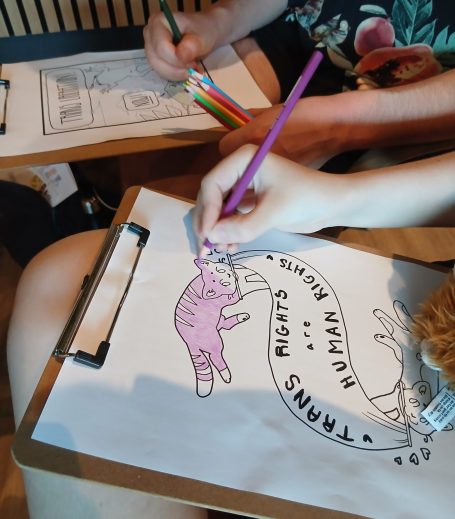
Toilets and changing rooms
Local trans* people talk of increasingly avoiding using public facilities, especially toilets and changing rooms, particularly following recent EHRC updates following the Supreme Court vs For Women Scotland Ltd ruling. Many health and wellbeing services are gendered and/or use spaces which are gendered making them much harder to access for many trans* people.
People report:
- A rise in experiences of harassment within local public toilets and changing rooms, including within local gay bars
- Avoiding social events with friends and at work due to uncertainties around toilet access
- Gyms and swimming pools often have gendered changing rooms and despite a high desire for swimming especially, any changing room and toilet open to the public comes with a fear and risk of harassment and hate crime
- Local social prescribing schemes to support health and wellbeing often rely on council gyms and pools which have gendered facilities and are experienced as high risk for harassment
- There are very few inclusive facilities, and it is hard to know where they are – mapping of inclusive options would help
- Trans* children of school age report bullying and harassment and fear this will worsen if they use school toilets and changing rooms
- Many trans* children of school age report withholding at school to avoid using gendered facilities, but often find they are forced to use changing rooms for gendered PE classes
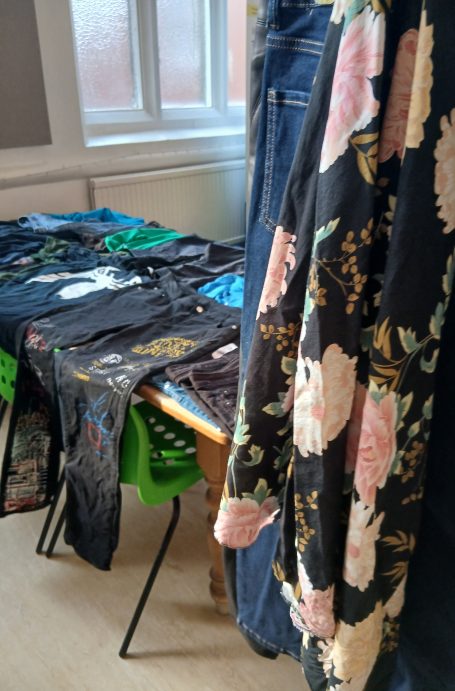
Visibility and harassment
People report fear of harassment, and a number also talk of experiencing harassment, particularly in public parks, green spaces, and public toilets. Trans* people report wanting to feel less hidden away and wish for more inclusive spaces and services to be more visibly trans* inclusive. There is a clear tension in this visibility with many talking of increased harassment and bullying following LGBTQ+ events which boost trans* visibility.
People report:
- Feeling growing tension being visible in public due to rising negative media coverage of trans* lives
- Being challenged when using toilet facilities and experiencing harassment
- Bottles being thrown at them during the memorial for Brianna Ghey
- Pride flags on businesses and services don’t necessarily mean they are trans* inclusive
- Visibly trans* spaces are wanted and needed and at the same time, spaces that are ‘too visible’ can become targets for harassment and hate crime
- Many would like to attend events and groups without feeling they need to out themselves and being able to change at the venue may help
- Trans* children and youth report that homophobia and transphobia in school is not taken seriously and struggle to know how and where to report it, so it is meaningfully actioned on
- To avoid harassment and fear of abuse, almost all report avoiding areas of the city and county, with some sticking to only trans* inclusive spaces, which are few
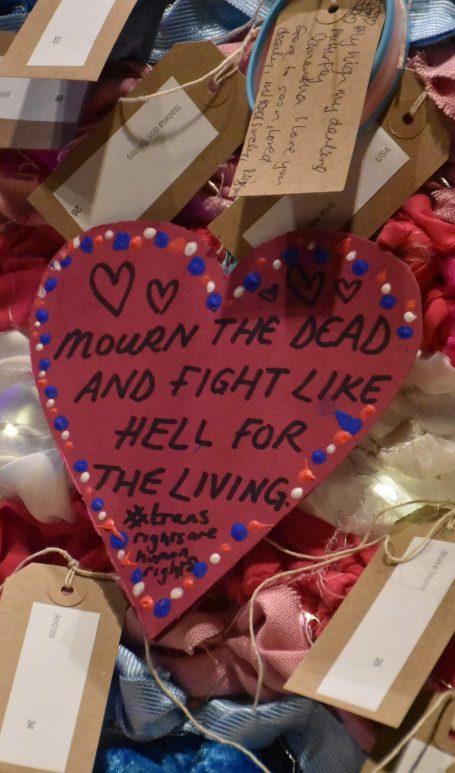
Green space and the outdoors
Alongside the general rise in harassment and fear of abuse and harassment, trans* people report particularly feeling unsafe or threatened within local green spaces and parks. Many talk of wishing to access more green space and go walking and hiking as a safe group.
People report:
- Experiencing harassment within local parks and green spaces
- A desire to be outside, walking and socialising, with accessible and more challenging walking opportunities
- Being in venues where doors can be locked improves perceived safety but results in people feeling hidden away
- A desire to socialise more visibly and outside, whether that be at an allotment or for a picnic in a local park

Swimming, sports and fitness
People discuss trying to find ways to manage their physical fitness. Some access the gym with varying levels of success and others feel totally isolated from any gym space due to fears of harassment and dysphoria. Swimming was consistently and overwhelmingly reported as hard to access with an overwhelming desire for an inclusive option to be able to swim again. Many also discussed gendered sports teams and PE lessons causing distress, for those wishing to compete and being barred, and from young people in schools.
People report:
- Having lost the ability to swim and missing swimming but finding no option that feels inclusive, avoiding gendered changing rooms and negotiating potential harassment from the public
- Gyms are often hyper masculine and in no way visibly inclusive
- Many gym and pool facilities have gendered changing rooms and toilets
- Lacking the right knowledge to know how to exercise in ways that are beneficial to their specific bodies and desired gender outcomes and would like lessons on exercising safely
- Whilst some sports are inclusive like Roller Derby, Climbing, and some football teams, many sports feel inaccessible due to being gendered or hyper-masculine
- Trans* young people report feeling made to participate in sports that don’t align with their gender at school and being unable to access sports that have been restricted to one gender
- Disabled trans* people find it very difficult to find sports and fitness groups that are accessible and trans* inclusive
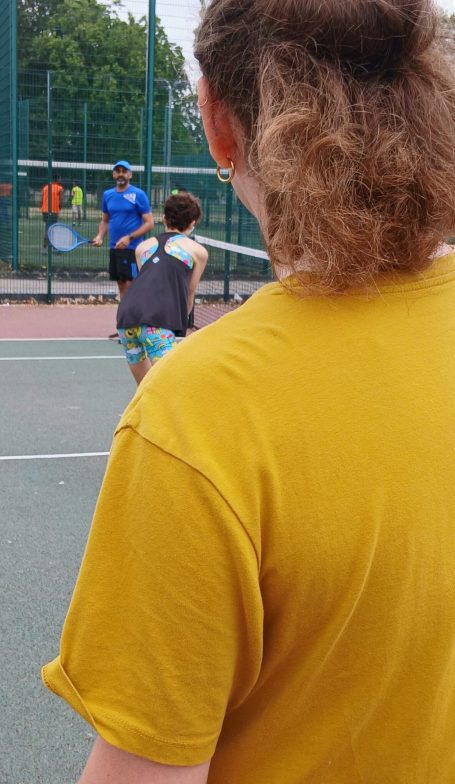
Third paces and sober spaces
Many existing LGBTQ+ venues are either support services like Trade and the LGBTQ+ centre, or bars and clubs. Trans* people consistently report the desire for more third spaces that are trans* inclusive, sober, and don’t feel like a support ‘service’. The limited options for socialising increase experiences of isolation or rest on feeling like you are a service user.
People report:
- Existing LGBTQ+ bars and clubs feel unsafe for many – some have experienced transphobic harassment in some of the venues, particularly in the toilets
- Many people don’t or can’t drink and don’t wish to be confined to a bar to find trans* inclusive space
- Pride is only once a year and many struggle with the sensory overwhelm of the space and share criticism of it feeling corporate and not community led
- Services like Trade and the LGBTQ+ centre are great but many talk of feeling unable to socialise properly in the space because they feel like a ‘service user’
- Many trans* young people have no space to be out and themselves and can’t access spaces which are 18+ and/or where alcohol is present

Embodiment and joy
Many trans* people would like support in understanding what works for them and their bodies especially in terms of movement, make-up, and clothing. Some discuss the challenge of finding appropriate clothing fitting spaces especially for bras and binders. Alongside this, many trans* people discuss varied hobbies and passions and share many ideas for finding ways to creatively express themselves and connect with each other. Many would like more opportunities to paint, draw, craft, share poetry and otherwise feel able to express themselves within safe and inclusive spaces and communities.
People report:
- The desire for more spaces and opportunities to cultivate trans* joy
- A need for make-up tutorials and guidance on clothing and movement
- Struggling to find spaces for trying on clothing and accessing bra/binder fitting
- Wishing for an opportunity to safely shop or swap clothing
- Fearing going clothes shopping due to uncertainty around the shop’s inclusivity status and access to fitting rooms
- Wanting to explore vocal changes and access support in training their voice and learning to sing
- Wanting opportunities to creatively express themselves and connect through art, crafting, music, poetry etc.